Cybersecurity is built around three fundamental concepts: Threat, Vulnerability, and Risk. Understanding these concepts is essential for protecting systems, networks, and sensitive data from cyberattacks. Organizations use these principles to identify security weaknesses, evaluate potential attacks, and reduce the chances of damage.
In this article, we will explain what threat, vulnerability, and risk mean, how they are connected, and how organizations manage them.
What is a Threat?
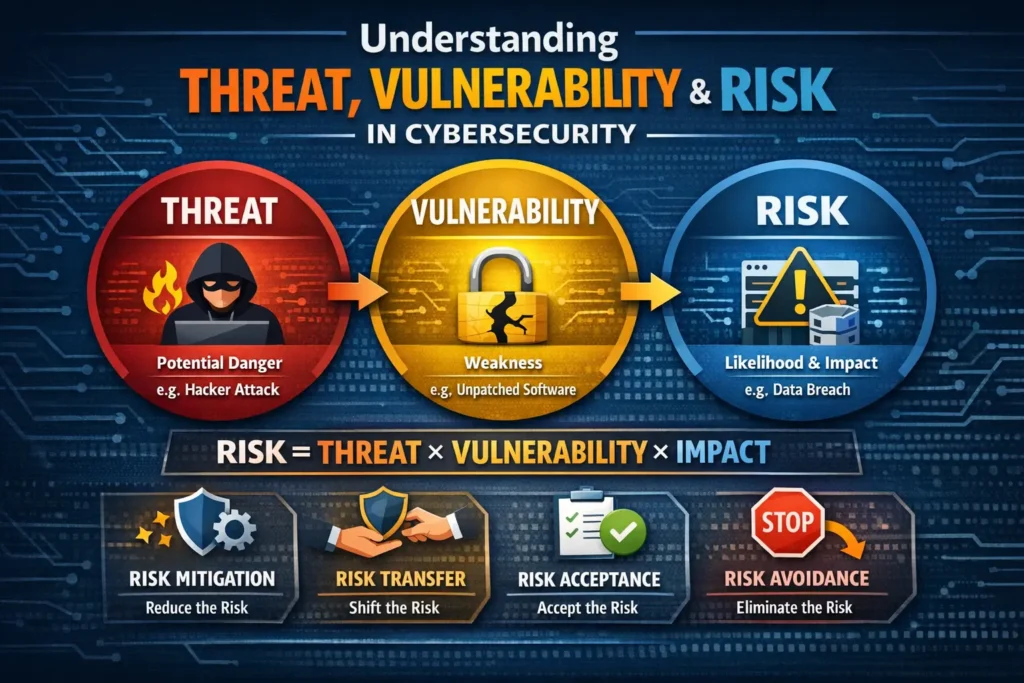
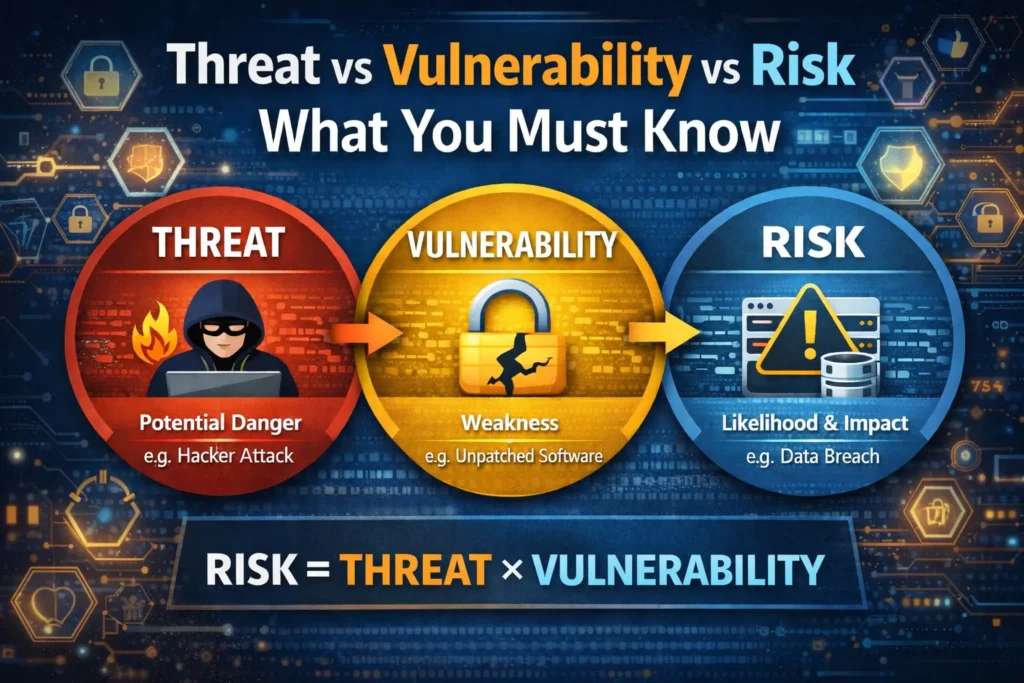
A threat is any potential danger that can exploit a weakness in a system and harm an organization or individual. Threats can come from hackers, malware, insiders, or even natural disasters. A threat does not mean an attack has already happened; it just represents the possibility of an attack.
Examples:
- Malware such as viruses, ransomware, and spyware
- Phishing attacks targeting users through emails
- Hackers attempting unauthorized access
What is a Vulnerability?
A vulnerability refers to a flaw or weakness in a system, application, process, or even in human behavior that attackers can take advantage of. If a vulnerability exists, it creates an opportunity for threats to succeed.
Examples:
- Outdated or unpatched software
- Weak passwords
- Misconfigured servers or firewalls
- Lack of employee cybersecurity awareness
What is Risk?
Risk is all about the chance that a threat could take advantage of a vulnerability and cause some harm. It also looks at what kind of damage could happen if that attack actually takes place.
Risk helps organizations figure out which security problems need to be tackled first.
Risk Formula
Cybersecurity professionals often represent risk using the formula:
Risk = Threat × Vulnerability × Impact
This formula helps security teams:
- Prioritize security issues
- Focus on the most critical risks
- Support decision-making in security planning
For example:
- Threat: Hacker
- Vulnerability: Weak password
- Impact: Data breach
Risk Management
Organizations may not be able to wipe out every single threat, but they can definitely handle risks in a smart way. Cybersecurity experts typically rely on four key strategies to keep things secure.
1. Risk Mitigation
Risk mitigation means reducing the likelihood or impact of a threat.
Examples:
- Installing security patches
- Using firewalls and intrusion detection systems
- Implementing multi-factor authentication
2. Risk Transfer
Risk transfer means shifting responsibility for managing certain risks to a third party.
Examples:
- Cybersecurity insurance
- Outsourcing security operations to a managed security provider
- Using third-party security tools
Let’s take a look at a real-world scenario involving CrowdStrike, a cybersecurity firm that offers endpoint protection to businesses around the globe.
In July 2024, a problematic update from CrowdStrike led to millions of Windows computers crashing all over the world. This incident caused significant disruptions for airlines, banks, hospitals, and various businesses. Many organizations depend on security vendors like CrowdStrike to handle their endpoint security.
By partnering with these vendors, companies effectively shift some of their cybersecurity risks to outside providers. When the incident unfolded, most of the public backlash was directed at CrowdStrike instead of the organizations that were affected.
This situation illustrates how risk transfer operates in real life, where the responsibility for managing certain risks is handed off to another entity. However, this event also serves as a crucial reminder: transferring risk doesn’t mean it disappears entirely. Organizations still need to carefully assess their vendors and keep robust backup strategies in place.
3. Risk Acceptance
Sometimes, organizations choose to accept certain risks, especially when the cost of addressing them outweighs the potential damage they could cause.
For instance, a small vulnerability in a low-impact internal system might be tolerated for a while.
4. Risk Avoidance
Risk avoidance means completely eliminating activities that create risk.
Examples:
- Removing vulnerable software
- Disabling insecure services
- Avoiding risky technologies
Why These Concepts Matter in Cybersecurity
Grasping the ideas of threat, vulnerability, and risk is crucial for organizations because it allows them to:
- Spot security gaps
- Ward off cyberattacks
- Focus their security spending wisely
- Enhance their overall security stance
Many cybersecurity frameworks, such as NIST, ISO 27001, and CIS Controls, are built around these concepts.